“Laser” is an acronym for “Light Amplification by Stimulated Emission of Radiation.” Laser light is monochromatic (having only one wavelength) and polarized.
Challenges: Temperature drift can affect the frequency of a laser, as changes in temperature can alter the physical properties of the laser components. Therefore, more expensive lasers have control circuits to ensure frequency stability.
Lasers are monochromatic, but it is still important to keep in mind, for example, in lens design, that the wavelength of cheaper lasers can slightly change with temperature.
The magnitude of these shifts can be around 0.3-0.5 nm per degree Celsius.
As the temperature increases, the power of the laser decreases.
The main effect of lenses is that they map object points to image points.
Let say we have two object points, for example the Top T0 and the bottom B0 of a vase. A two element compound lens works like this :
The object points T0 an B0 are mapped to image points T1 and B1 by lens element number 1. The lens elements are numbered starting from object side.
The images T1 and B1 then become the new “object points” of lens element 2 and map T1 and B1 to “images of image” of T0 and T0, called T2 and B2″.
A lens with 10 lens elements accordingly generates sequences
T0->T1->T2->… -> T10
and
B0->B1->B2->….-> B10
The image produced by a lens can be in front or behind the lens.
It can be smaller or bigger than the object.
Of course we want images of trees to be smaller than trees.
Image of microscopic details we of course want to be larger than the details.
The focus plane contains the image of infinitely far away objects.
When the object moves to infinity (= when g gets infinitely large), then
And therefore
On the object side, an object with a double focal length distance is mapped to an image with a double focus length distance on the image side.
In other words : If we want a 1:1 mapping in distance X from the sensor you have to choose
(but subtract the distance of the principal points from X)
The picture is at infinity when the object distance equals the focus length.
When an object nears to the focus length, the image distance rises. Therefore .
For an object closer to the lens than the focal length holds: the image is generated on the object side (!) of the lens.
The object and image distances are calculated from the primary planes on the object and image sides, respectively.
As a result, the object distance differs from the working distance in most cases.
The focal length is a paraxial concept. Therefore the Gauss lens equation is only valid in the paraxial region of the lens, the region where holds. Most calculators don’t care (including ours), As a result, anytime larger viewing angles are involved, the results are essentially a “informed guess.”
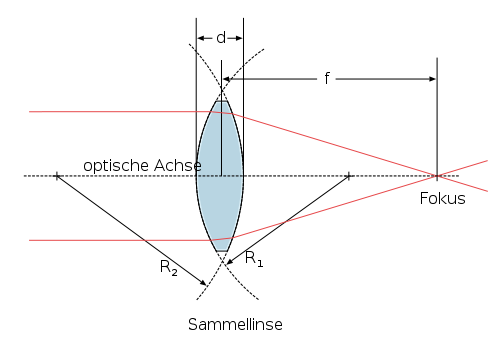
The formula (at the bottom of this post) shows for thin, spherical lenses the relationship between shape and power.
Be d center thickness of the lens element. and be the radii of the spheres that describe the surfaces.
Keep the sign conventions for radii in mind, however!
be the index of refraction of the medium outside the lens and
n be the index of refraction of the lens material.
f be the focallength of the lens and
D be it’s Power,
For spherical optical systems holds generally in the paraxial region:
Is the surrounding medium air, we get (because ) the approximation:
Are the lenses also thin (idealizing ), the formula simplifies to Lensmaker’s formula:
Light that we can see (“visible light”, “VIS”) is a small part of a spectrum of a thing called “electromagnetic radiation”, distinguished by something we call “wavelength”.
As the wavelength varies in the visible spectrum, the light appearantly changes color from violet to red.
There are no actual boundaries between one range of wavelengths and another. So numbers associated with a certain range are only approximate.
If we explore the spectrum from long wavelengths to shorter wavelengths, we meet :
“radio waves” : regular broadcast wavelengths are for example 500 meters long, but even longer radio waves exist
a) For telecentric lenses this is the ratio of image size to object size
b) For entocentric lenses this is the ratio of image size to object size at a given distance.
Example (telecentriclens)
If you want to map an obbject of 10mm diameter to s Sensor with 1/3″ (= 6mm diagonal!), you need a magnification of 6/10 = 0.6x
The lower the magnification, the larger the visible object section. Say, if you can’t get a lens with the desired magnification, you can choose a lens with a slightly smaller magnification, eg 0.55x instead of 0.6x in the above example.
Example (entocentriclens)
With a 1/2 “Sensor (8mm diagonal), a distance of 500mm and an object cutout of 16mm diagonal, the magnification is 8/16 = 0.5.
Doubling the distance (to 1000mm) allows the lens to see about twice as much (32mm ). As a result, a magnification of 8/32 = 0:25 results.
In particular, the magnification at infinity is zero!
Since for entocentric lenses the FOV changes with the working distance, the magnification changes too!
Each entocentriclens achieves each magnification (if it can be used beyond the MOD)! .. We just have to choose the right distance between the object and the camera.
So there’s the naive hope that just one entocentriclens could be enough for all applications then …
The Problem is however, that (for entocentric lenses) with the distance to the object, also the perspective changes. Telecentric lenses keep the perspective!
Typical high magnifications in image processing end at 10x.
Typical high magnifications in microscope imaging end at 100x, where magnifications above 40x usually need immersion, say, the lens is used in oil!.
When you read about higher magnifications like 200x and higher, there’s an excellent chance that the size of the monitor is also included!
We use cookies to optimize our website and our service.
Functional
Always active
The technical storage or access is strictly necessary for the legitimate purpose of enabling the use of a specific service explicitly requested by the subscriber or user, or for the sole purpose of carrying out the transmission of a communication over an electronic communications network.
Preferences
The technical storage or access is necessary for the legitimate purpose of storing preferences that are not requested by the subscriber or user.
Statistics
The technical storage or access that is used exclusively for statistical purposes.The technical storage or access that is used exclusively for anonymous statistical purposes. Without a subpoena, voluntary compliance on the part of your Internet Service Provider, or additional records from a third party, information stored or retrieved for this purpose alone cannot usually be used to identify you.
Marketing
The technical storage or access is required to create user profiles to send advertising, or to track the user on a website or across several websites for similar marketing purposes.



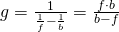
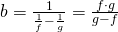


 .
 holds: the image is generated on the object side (!) of the
 holds. Most calculators don’t care (including ours), As a result, anytime larger viewing angles are involved, the results are essentially a “informed guess.”
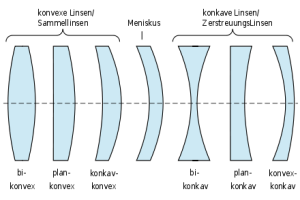
 and
 be the radii of the spheres that describe the surfaces.
 be the index of


 ) the approximation:

 ), the formula simplifies to


